Glue & Sealant Page
Vac-U-Cracker™ 1:10 Scale Crackerbox Kit
Vac-U-Pickle™ 1:13 Scale Pickle Fork Hydroplane Kit
Recommendations & Feedback
DECK-TO-HULL JOINT:
While epoxy will work fine to seal the deck to the hull, it can cure brittle and may loose seal with handling or impact with other boats. CA bonds styrene well but won't absorb impact. Plus, you have to have good joint-to-joint contact for CA. I have found that polyurethane-based sealants will bond to roughened styrene yet flex like rubber on impact. Sealants will fill gaps and hold the odd deck-to-hull joint together.
Unlike silicones, polyurethane sealants don't give off acetic acid, that vinegar-smell given off by curing silicone. In a closed environment, the byproducts of curing silicone can corrode brass & copper wires and circuitry. Avoid them.
Polyurethanes are slow curing. Even the Fast Cure 5200 takes 24 hours. In summer weather, the Loctite PL Sealant may take 48 hours to fully cure, although it will begin to set up in a few hours. In winter temperatures, it could take 3-4 days. Gives off a paint-thinner smell as it cures.
|
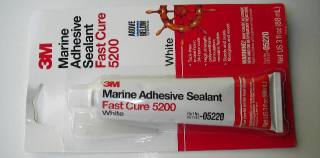
3M has a standard and this "Fast Cure" version of their 5200 sealant. Best to use this Fast Cure as the standard version may run before it cures. They use this in real boats above and below the waterline. Flexible and permanent. Still, best to roughen the surfaces to be bonded. I have heard that it may shrink or crack over time.
|
 |
|
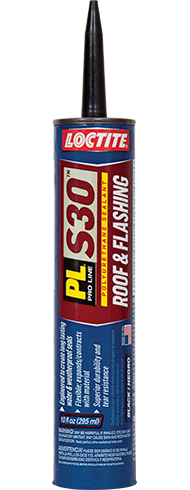
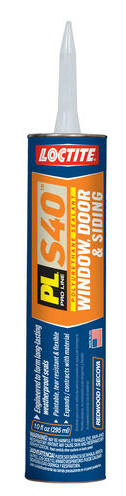
These are standard caulking tubes of Loctite PL Brand S30 Polyurethane Roof & Flashing or S40 Window, Door & Siding sealant. It is inexpensive, and bonds to styrene and polyethylene best of all of the Polyurethane sealants I tested. They are MESSY, jet black or pure white and sticky. Its like caulk to use. Messy and has no strength at all until it cures. Have a roll of paper towels handy when you are using this. Wear old clothes. Mineral spirits will remove uncured sealant from you or from the styrene. It takes some effort to push it out so use a good caulking gun. Cures like tire rubber. Doesn't shrink. I have cured samples that are still flexible and are still bonded after 12 years. Cut the tip and puncture a foil seal inside the tip to use. Buy at Home Depot, Lowe's, etc... Testing has shown that both seem to have similar bonding properties. Makes a flexible joint so collision impacts are less likely to cause damage to your boat. These make a permanent bond. If you want a removable bond, try an RTV (Room Temperature Vulcanization) gasket sealant. Paintable. Better bond if you scuff the plastic with 100 grit sandpaper. The ONLY way to reseal this is to use aluminum metal foil tape and tightly wrap around tip and fold over. Even then, in a month or two, the contents of the tip may solidify. Unsealed, the entire tube will cure solid in about 3 weeks. Exposure to air/moisture starts the process. Great for roofing or exterior work as it doesn't degrade in sunlight like silicone.
|
|
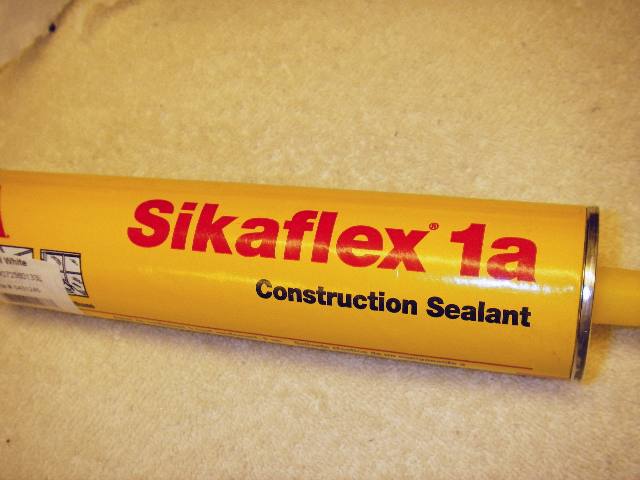
| Sikaflex 1a. White in color. Polyurethane Construction Sealant. I found it doesn't have the tensile strength of PL Roof & Flashing. It doesn't bond to styrene as well. A good waterproof sealant but it doesn't have the bonding properties suited for a structural adhesive in styrene models. |
 |
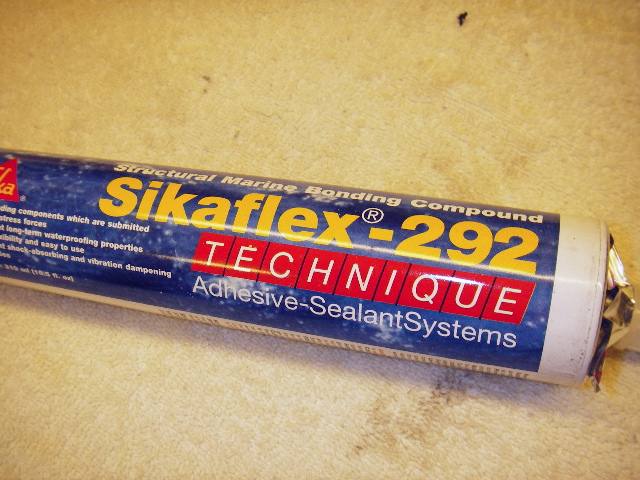
| Sikaflex-292. White in color. Costs twice as much as Sikaflex 1a. Better tensile strength. Good bond. Not as good as PL Roof & Flashing when used with styrene. Separate nozzle that unscrews from the aluminum tube. Will reseal and store for extended time as a result. |
 |
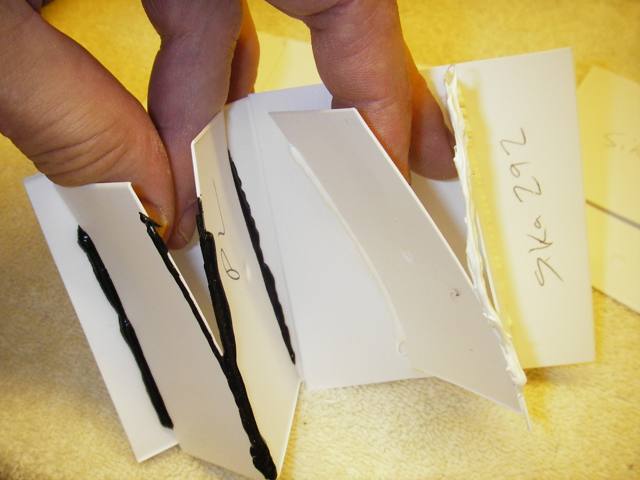
| Comparison test: Butt joints, edge glued (sanded and non sanded) and lap joints. Heat-cured at 95 degrees for 48 hours. Tested Sikaflex-292, Sikaflex 1a, and PL Polyurethane Roof & Flashing sealant. Results: The Sikaflex 1a is not recommended. It released too easily in all three tests. Sikaflex-292 did well with the butt joint test. The lap joints were ok. Odor given off when peeling them suggests it had not fully cured at the inside during that time. It separated from the edge-glued samples on one or the other side of the bond. PL Polyurethane Roof & Flashing sealant did better on all 3 tests. See below. |
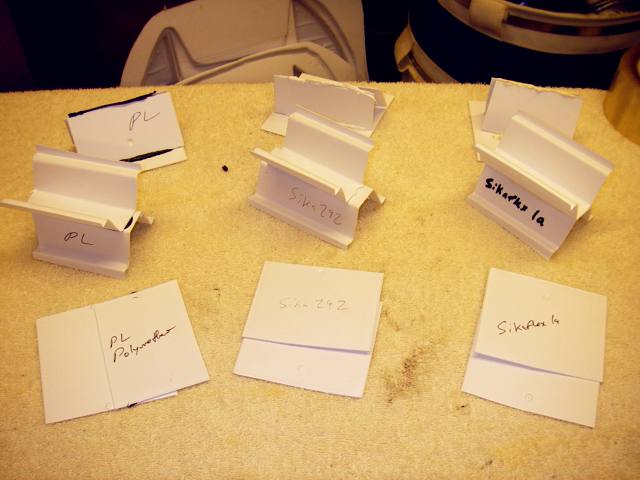 |
| Here is an example of the edge glue test. The styrene is un-sanded. Forcing the two pieces apart cause the white Sikaflex 292 to separate from the styrene. The PL Sealant remained bonded to the styrene, finally tearing apart along the center first. |
 |
 TM
TM